How to Remove the Wrong Kind of Friction (and Add the Right Kind)
With The Friction Project's Bob Sutton

Who doesn’t want to do better work with less friction?
Friction can be invisible until it’s unbearable. We tolerate pointless meetings, bloated email chains, and jargon-filled decks. The good news is, friction is actually a design problem we can solve.
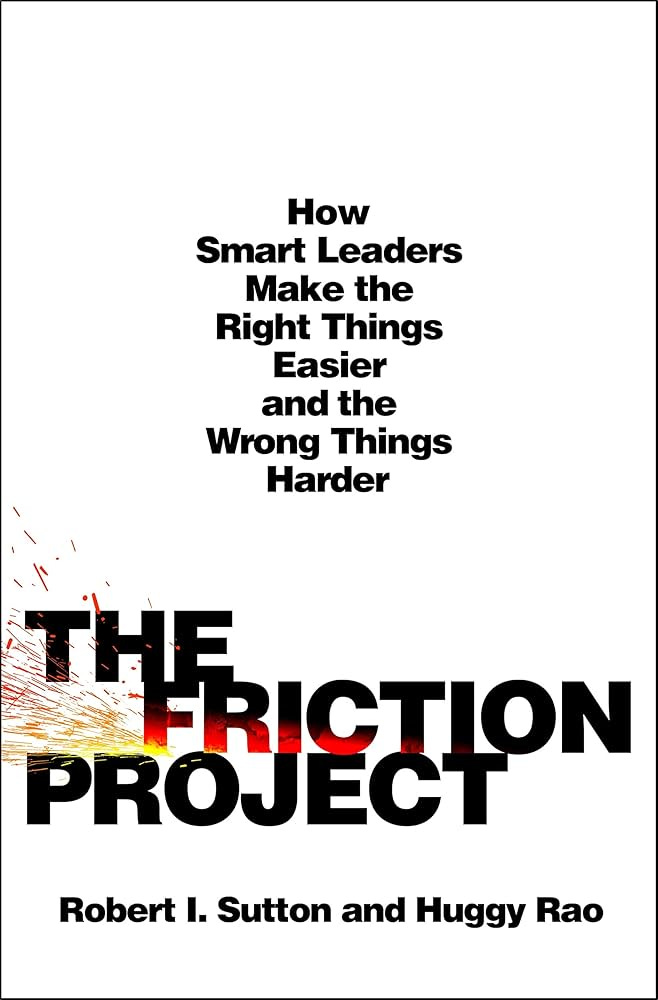
This week’s How We Future guest is Bob Sutton — Stanford professor, bestselling author of The No Asshole Rule and Scaling Up Excellence, and co-author (with Huggy Rao) of The Friction Project. Bob studies why smart people in smart organizations make it so hard to get things done, and what we can do about it.
He’s a master at naming what’s hiding in plain sight, and he shared some remarkable insights in our conversation. We even played a game I designed just for him: the Friction Fixer Edition(!) where we diagnosed real-world friction offenders live on air. (Spoiler: back-to-back calendars, sham participation meetings, and death-by-PowerPoint all made the list.)
This season, we’re focusing on classes we wish we had taken. And a class on friction is one we can definitely all use.
Instructor: Bob Sutton
Class Exploration: Removing Friction to Make the Right Work Easier — and Adding Friction to Make the Wrong Work Harder
Drawing on organizational psychology, behavioral science, and decades of work with companies like Google, Salesforce, and Stanford, Bob and his colleague Huggy Rao spent seven years building a framework for becoming what they call “a trustee of other people’s time” — someone who deliberately clears the way for good work, and just as deliberately raises the bar for bad work.
What to Listen For:
Spending time with Bob is its own kind of joy. He is warm, funny, endlessly curious, and he never wastes your time.
Bob helped me see that one of the most powerful things we can do is to take responsibility for the friction we create, often without even realizing we’re doing it.
We are wired for addition, and it’s making us miserable
Humans default to adding.
More meetings, more tools, more processes, more policies.
Bob calls this “addition sickness,” and it’s not a character flaw. It’s evolutionary and organizational.
The fix is building subtraction into your practice.
Bob and Huggy have run their Subtraction Game with thousands of people (like Google vice presidents and Girl Scout leaders). They ask: what’s driving you crazy, and what could we remove?
Even better: keep a "no map" — a list of things you're explicitly choosing not to do. You don't have to fix what you never started.
Know your “cone of friction”
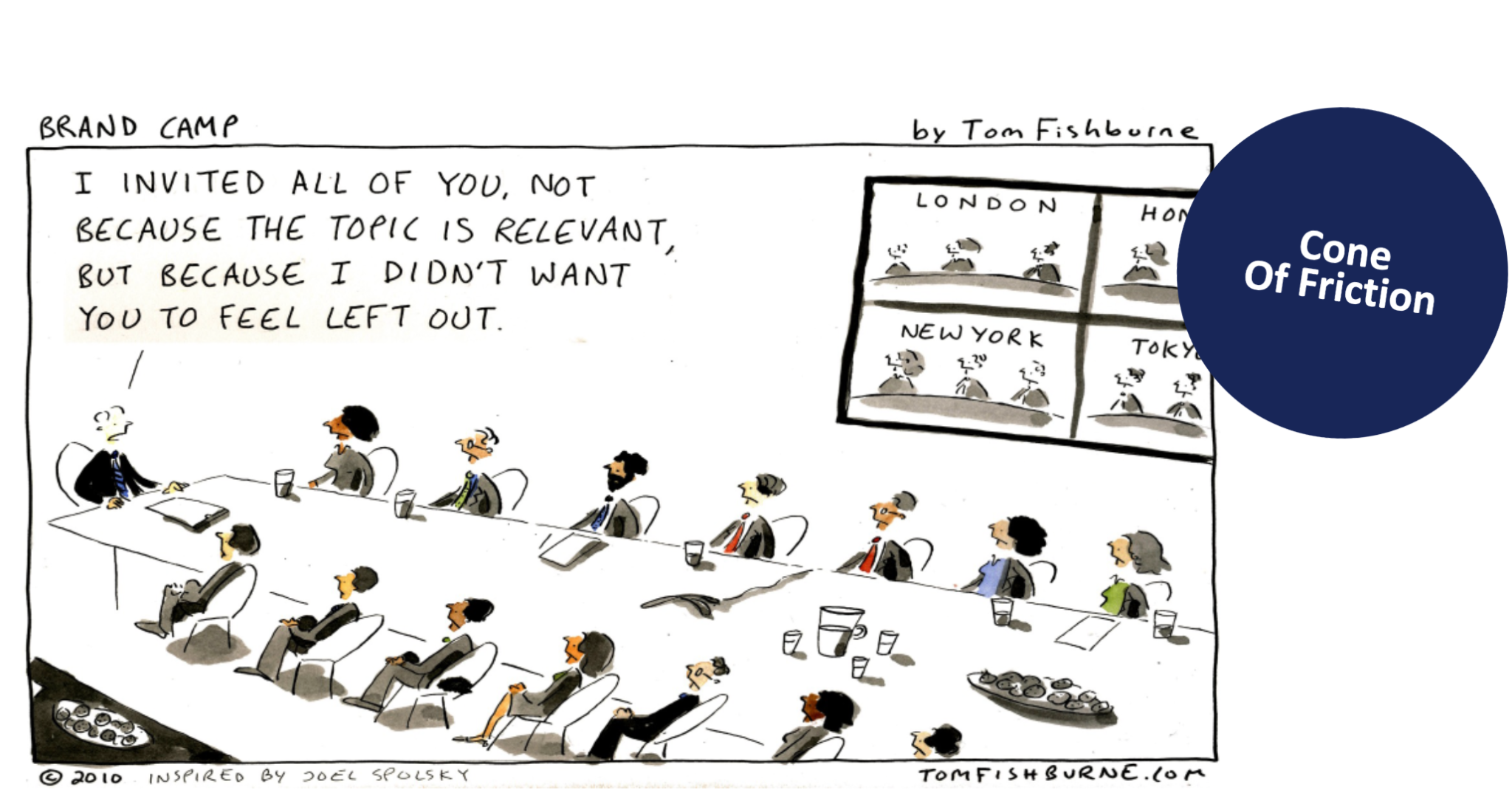
Leaders are often unaware of the downstream friction they can cause with their policies or even off-hand comments.
An offhand comment like “we should meet more often” or “we should do regular updates” becomes a company-wide initiative, even though it doesn’t make sense for everyone.
This might lead to hours of extra prep time for a standing meeting that doesn’t really add any value. Or the design of an open office environment that was supposed to promote informal collaboration actually makes it harder to get “real” work done.
Bob and Huggy call the wider implications of those choices the “cone of friction.”
Not all friction is the enemy
The goal isn't to become totally frictionless. Zero friction is dangerous (try skiing on ice).
The goal is right-sized friction: making the wrong things harder and the right things easier.
That means adding resistance to decisions that deserve more thought, like a new software tool that everyone in your company will have to learn, a half-baked initiative, or a meeting nobody needs.
Bob calls the people that do this well “friction fixers.” They’re part diplomat, part designer, part detective. And every organization needs more of them.
“I used to think… and now I think.”
I used to think friction was just an obstacle to clear. And NOW I think it’s a design choice — one we’re making all the time, whether we realize it or not. The question is whether we’re making it intentionally.
What’s your “I used to think… and now I think” after listening? Comment below!
Bonus: Try the Subtraction Game yourself.
How might you “subtract” things from your life that are unnecessarily making work harder or more complicated? Pull up your calendar, your last all-hands deck, or your most recent meeting invite as a starting point. You might be surprised at what you find and what you’re ready to let go of.
And, as Bob reminds us, subtracting shouldn’t be a one and done activity. Ideally it’s an ongoing practice like mowing the lawn.
Listen to the episode on:
Find out more about the episode and read along:

Follow How We Future:
Want to contact us? Email hello@howwefuture.com