

Why Play Works
Insights from Social Entrepreneur Jill Vialet

In serious times, play can be one of our most powerful tools.
In this episode of How We Future, I talked with Jill Vialet, social entrepreneur, author of Why Play Works, and founder of Playworks, about why play belongs at the center of how we lead, learn, and navigate complexity. Jill built an organization that transformed recess into a source of connection, trust, and resilience for millions of kids, and her insights apply far beyond the playground.
I first met Jill years ago when she was a Fellow at the Stanford d.school. For years Jill co-taught a class called “Designing for Play,” which, among other assignments, asked students to design a play ritual as they entered the classroom. Jill is always pushing the boundaries of what’s possible, from helping start Substantial, which reimagines the role that substitute teachers play in schools, to leading established organizations as Interim Executive Director for UC Berkeley’s Center for Social Sector Leadership.
Jill has become one of my first phone calls whenever I’m working on a particularly challenging project.
Our conversation explores how play helps people regulate their nervous systems, build relationships across differences, and see new possibilities when problems feel stuck.
1. Play Isn’t the Opposite of Work
When Jill started Playworks nearly 30 years ago (originally called Sports for Kids), she aimed to address a critical issue she had noticed as an educator: recess was an overlooked opportunity for growth and development.
Jill makes the case that play builds essential capacities: resilience, trust, creativity, and the ability to imagine multiple possible futures. These are the essential skills for learning, leadership, and navigating an uncertain world.
Plato once said, “You can learn more from an hour of play than a year of conversation.”
And yet, play is often deprioritized or overlooked compared to “more serious work.” I’m still waiting to see “play” listed on a corporate scorecard as a KPI (Key Performance Indicators).
When we play together, we practice being vulnerable, taking risks, recovering from failure, and building trust. Those are precisely the capabilities we need most right now.
As Jill puts it, “We can’t have difficult conversations without first building familiarity, which leads to rapport, which leads to trust. Sometimes we need to spend more time playing together before we’re ready to talk.”
2. Small Systemic Tweaks Lead to Big Impact
Jill has a superpower for identifying the right leverage points in a system, the small changes that create outsized positive impact.
During our conversation, she shared one of my favorite examples of this. A school principal told Jill that she knew the Playworks program was working because she saw less graffiti in the bathrooms. Graffiti in the bathrooms is a highly unusual metric….and yet, it captured an important shift on the campus.
Here’s what was happening. Before Playworks, kids were hiding in bathrooms during recess because the playground felt too chaotic. The school’s initial response was to assign a teacher to guard the bathroom, a reactive stance to the symptom, not the core problem. This mirrors the “hard control” responses of what so many school districts have done to tighten up their environments.
But kids weren’t the problem. The system was the problem. When recess became structured and supportive, when kids had choice, voice, and the skills to play well together, they stopped hiding. The graffiti disappeared. Not because someone was watching, but because the need to escape had vanished.
Jill’s approach reveals what happens when we identify the right leverage points. Recess is the foundation for school culture, academic success, and children’s wellbeing. When it works well, behavioral issues decrease, academic engagement increases, and kids feel safer and more connected.
The broader principle applies far beyond playgrounds. Whether we’re leading teams through change, navigating difficult conversations, or trying to solve complex problems, we need the equivalent of recess: dedicated space to experiment, connect, and reset our nervous systems.
Which brings me to one of my favorite ways to practice this.

3. Play Unlocks Futures We Can’t Yet Imagine
Play creates the conditions where new futures become visible, where “impossible” solutions suddenly seem obvious, and where diverse perspectives can combine in unexpected ways.
Jill and I discussed how imaginative play expands our sense of what’s possible, a theme that echoes earlier How We Future conversations I’ve had with improv specialist Dan Klein and futures facilitator Jeff Rogers.
One of my favorite futures games is “The Thing from the Future,” created by futurists Stuart Candy and Jeff Watson. It’s a simple but incredibly effective card game: “In a (blank) future, there is a (blank) related to (blank).” Wild imaginative futures get created within minutes.
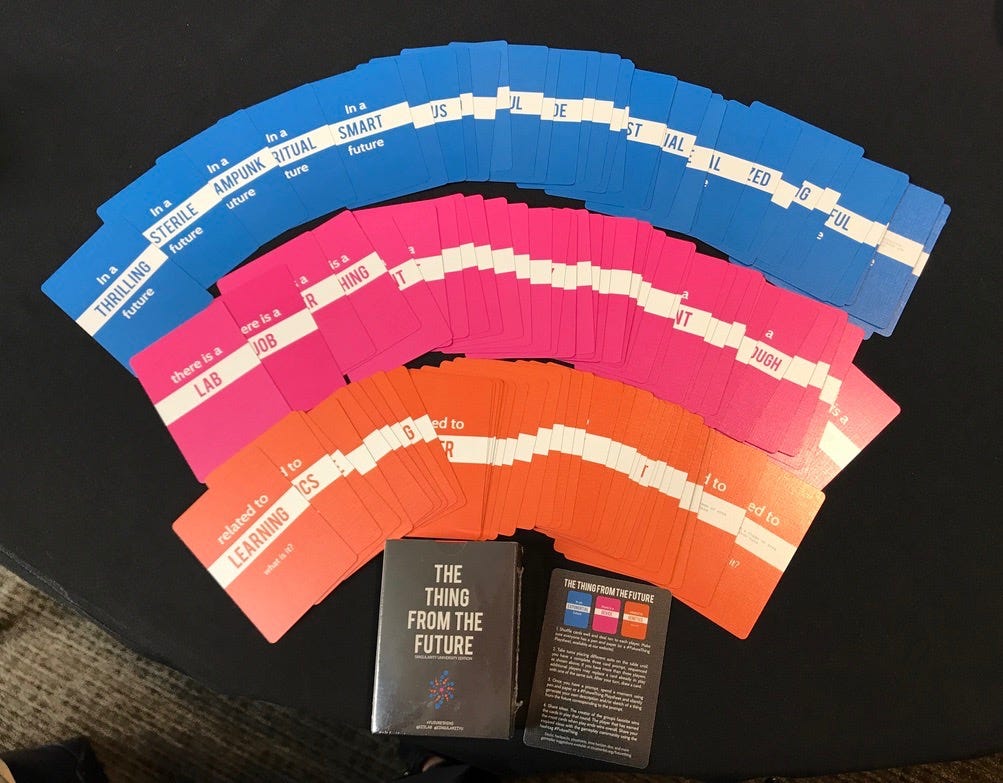
It’s such an effective jumpstart to imagination that my friends at Radical created an online version where you can create your own futures.
This type of imaginative play does more than entertain. It trains our brains to think beyond current constraints. When we play, we practice moving fluidly between different scenarios, holding multiple possibilities simultaneously, and building on each other’s ideas without judgment.
How We Future: Your Turn
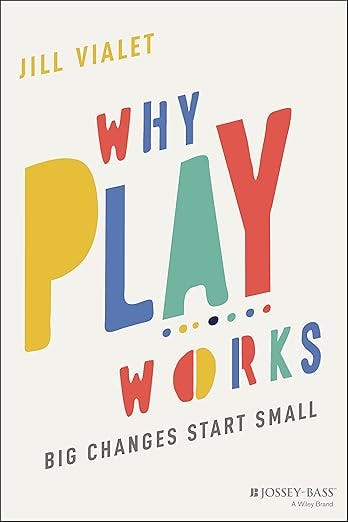
Jill ends her book with a chapter called “We Can Do This.” Her advice: “Start small, but start. Start Playfully.” She even provides detailed instructions for dozens of games that require no technology, resources or budget - just our willingness to try.
Think about your week coming up. Maybe you don’t need another strategic planning session in a windowless conference room. Maybe you just need a little bit more recess
What’s one small moment where your team can play together?
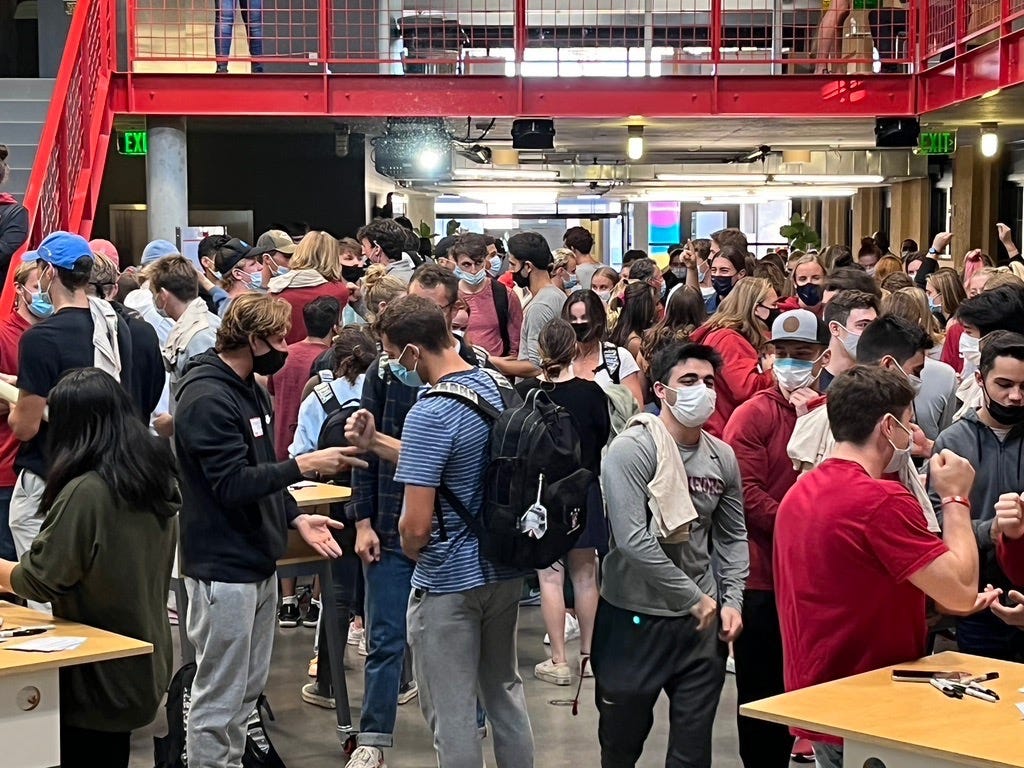
I’m not talking about an elaborate offsite. Even a quick game of “rock, paper, scissors” can transform the energy in the room from flat to electric. Jill helped me run a Ro Sham Bo tournament with about 200 student athletes one year, and it instantly electrified the room. You’ll have to listen to the podcast for that story!
Want to learn more? Check out Jill’s book Why Play Works: Big Changes Start Small and learn about her current work supporting leaders through organizational transitions here. Listen to our full conversation wherever you get your podcasts.
Because sometimes the most serious work we can do is remembering how to play.
Now go play.

This resonates a lot. I’ve seen more progress unlocked by 10 minutes of shared play than by another hour of “serious” discussion. Nervous systems matter. 👍