


Welcome to the Eames Institute of Infinite Curiosity!
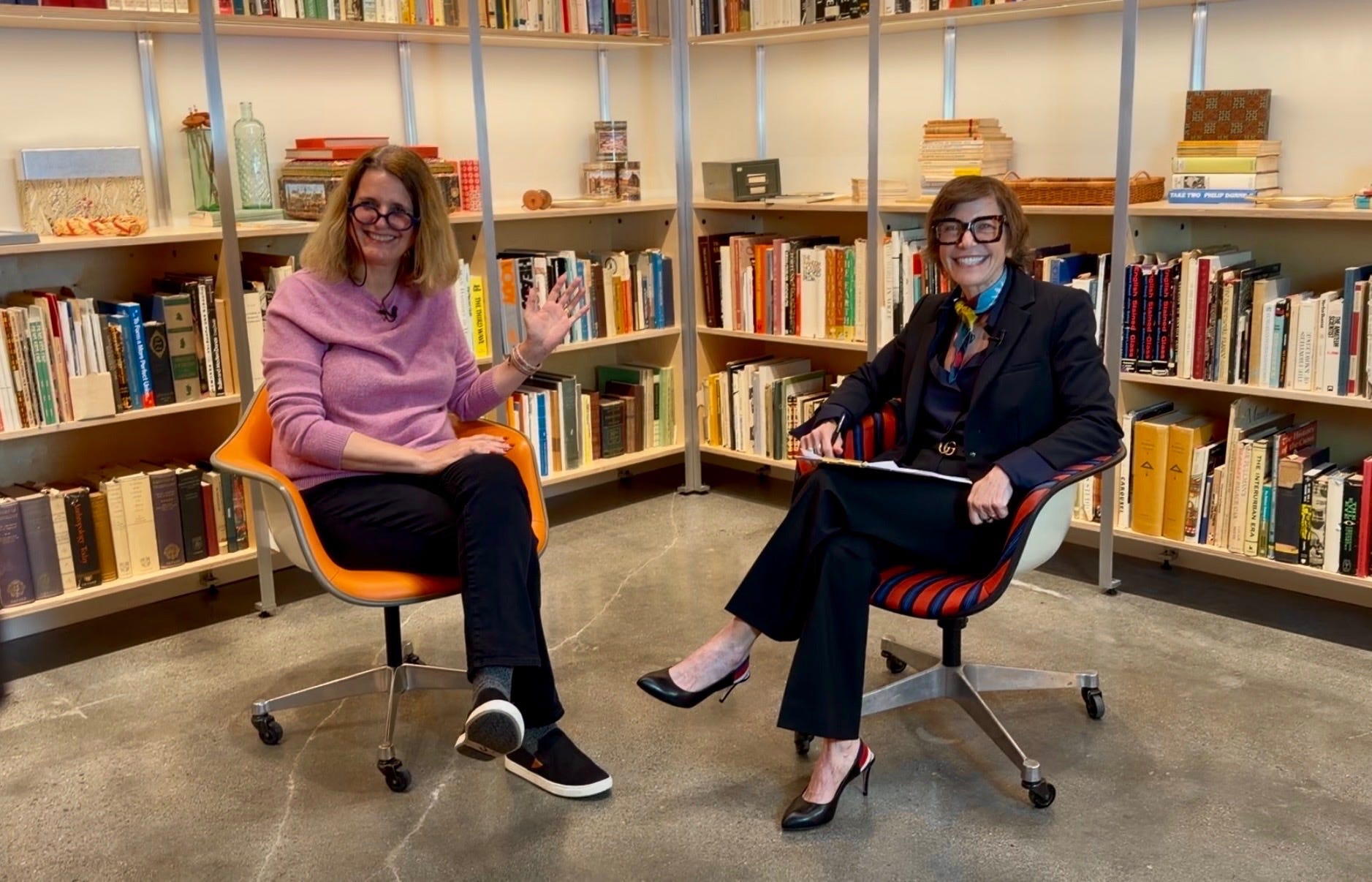
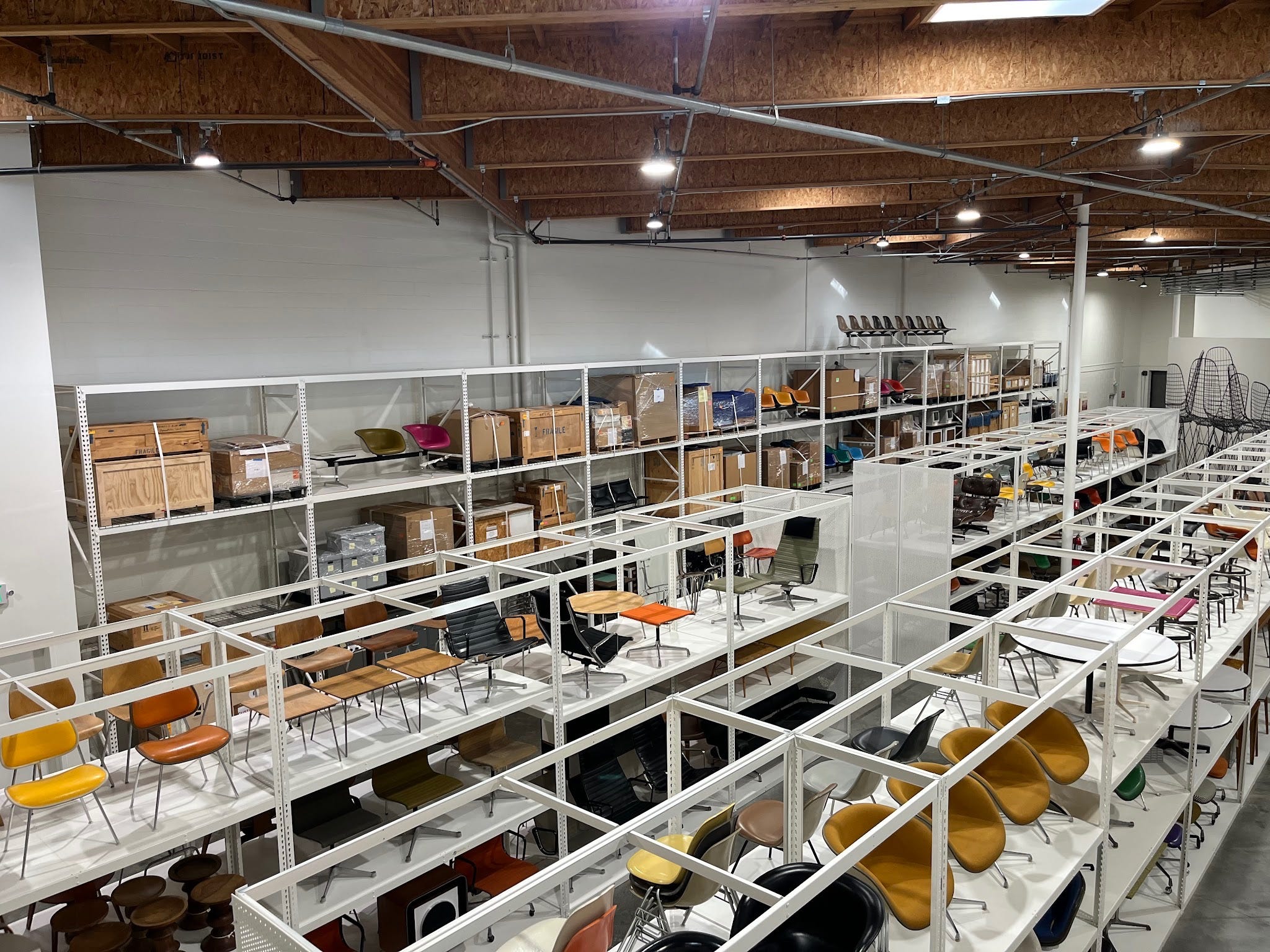
For this special episode of How We Future, I got to record in person with Llisa Demetrios, Chief Curator of the Institute and granddaughter of Ray and Charles Eames, while sitting in the Living Gallery of the Eames Archives in Richmond, California.
For me, visiting this incredible space feels like getting a Golden ticket to the Willy Wonka Factory, focused on the groundbreaking impact, legacy and philosophy of two of the most iconic designers in history.
Llisa holds a unique dual perspective in her role as both Chief Curator and as their granddaughter. That combination makes her one of the most compelling storytellers I’ve ever encountered — and one of the best ambassadors for their work.
If you know the Eames name primarily from their iconic chairs, my conversation with Llisa is an invitation to explore something much, much bigger. Like “Power of 10” bigger. (For those that don’t know that reference, check out their iconic short film on perspective shifts which has reached cult-like status.)
Beyond their famous furniture, their expansive studio work included films, exhibits for World Fairs, a leg splint for the Navy for WW II, a proposal for a National Aquarium, a multi-screen presentation shown in Moscow at the height of the Cold War – all emanating from their boundless, disciplined, joyful curiosity.
Here are just a few of the stories that really stuck with me:
Goodness all the way down.
Design continues to be such a misunderstood field, process and perspective. Too many people still think of design as a purely aesthetic practice of making things look beautiful.
Ray and Charles Eames didn’t think of themselves as making beautiful objects. “We don’t do art,” they said. “We solve problems.”
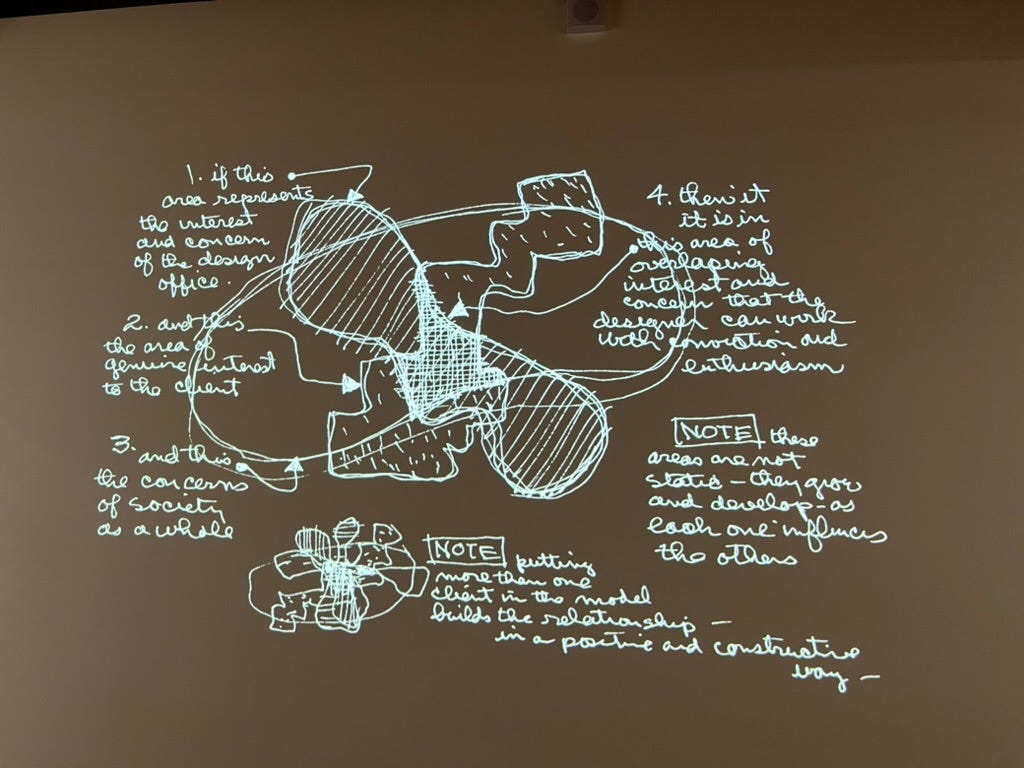
Ray and Charles captured their holistic design philosophy for a Musée des Arts Décoratifs 1969 Exhibition in Paris called “What is Design?” Instead of a lengthy dissertation, Ray and Charles drew what is now an iconic Venn Diagram outlining their studio’s expansive philosophy of design.Their work had to be good for the studio, good for the client, and good for society as a whole. See picture below.
Llisa recounted that Ray used to say it would take 5% of your energy to come up with an idea at the center of that diagram, and 95% to stay there. Meaning, it’s easier to come up with a great idea, but it’s much harder to execute and scale the idea with the same level of quality and intention. For example, their iconic Eames chairs were designed to be comfortable, scalable in production, and durable over time. Every detail was attended to through ruthless exploration and prototyping.
Charles also recorded a short conversation further articulating his POV with the exhibit’s curator Madame L’Amic that was later turned into a short film in 1972. Whenever I listen to this extraordinary exchange, I feel re-invigorated and energized about design as a force and discipline for good.
Below are just the first set of the 29 questions and answers to give you an idea for the tone and content. Be sure to check out the full Q&A film here.
Q: “What is your definition of ‘Design,’ Monsieur Eames?
A: “One could describe Design as a plan for arranging elements to accomplish a particular purpose.”Q: “Is Design an expression of art?”
A: “I would rather say it’s an expression of purpose. It may, if it is good enough, later be judged as art.”Q: “Is Design a craft for industrial purposes?”
A: “No, but Design may be a solution to some industrial problems.”Q: “What are the boundaries of Design?”
A: “What are the boundaries of problems?”
Learn from the people most affected.
Every studio project started with questions and curiosity about anyone who might touch the design.
When Ray and Charles were asked to design airport seating for Chicago O’Hare, their first conversations weren’t with airport executives — they were with the maintenance crews. They wanted to know what the biggest pain point was. They learned that replacement parts caused frustration and delays. So they designed a seat and back with the same shape, fabric that rolls into a tube, and a repair that takes one person and one screwdriver. Their design remains the airport standard.
Similarly, when designing seating for the Worlds’ Faire, they not only talked to the janitors who would have to clean the room each night, they also included fun mirrors throughout to help parents keep their antsy young children entertained. They thought about everyone.
No mistakes, only miscalculations.
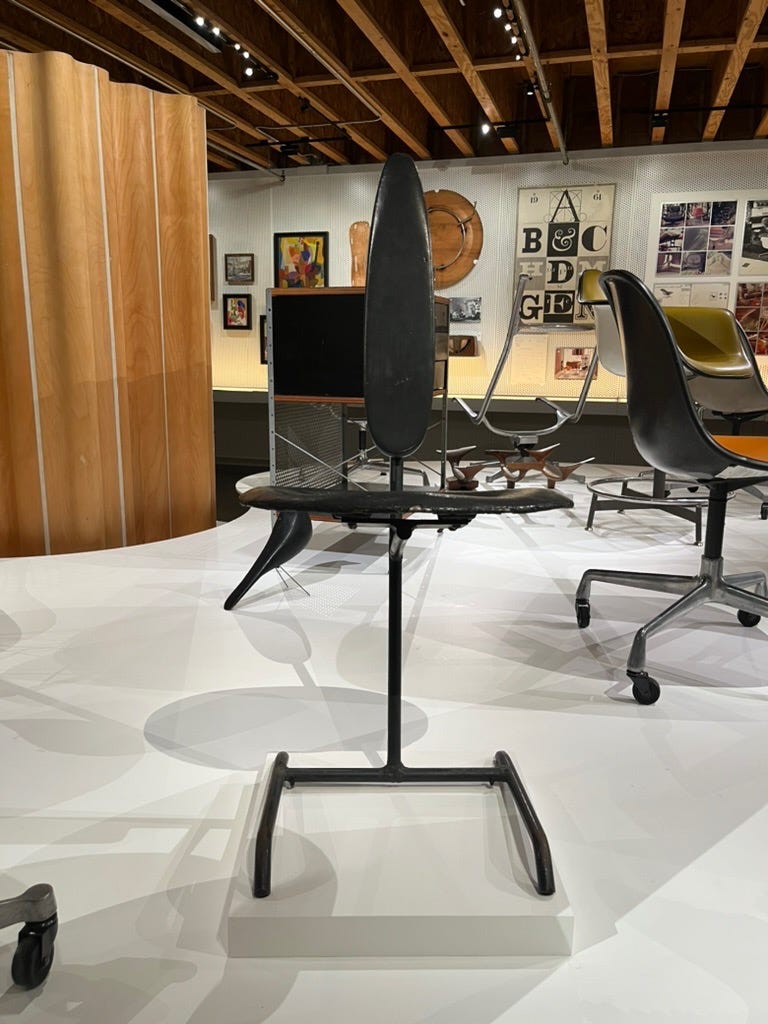
Ray and Charles had a phrase for the inevitable missteps: they called them miscalculations. The bikini chair didn’t make it into production, but it wasn’t a failure. It was a miscalculation that taught them something essential about materials and form. That learning traveled directly into the next chair, which did succeed.
Their process wasn’t about getting it right the first time. It was about staying curious when things didn’t work, and letting those miscalculations inform what came next.
Curiosity unleashes possibility.
Llisa recounted an amazing childhood story that captures Ray and Charles’s commitment to teaching and learning. She was eight, walking home from dinner with her grandparents following a meal of borscht which she didn’t enjoy. Charles asked: “How would you have done things differently? What would you have done with those ingredients?” Three blocks later, they’d built an entire story about why it was borscht that night.
That’s the kind of teaching I think we need more of right now.
Inspiring curiosity in all of us.
The Eames Archives is just the beginning for the Eames Institute of Infinite Curiosity. They’re building an extraordinary new museum in a former Birkenstock campus in Novato with Herzog & de Meuron, opening in 2030. And The Curious 100, the Institute’s new community of builders, caretakers, connectors, creators, curators, explorers, makers, protectors, reformers, and storytellers working in the Eames spirit today. (I’m honored to be among them.)
Llisa closed with a charge Charles once gave a departing member of his studio, and I’ll pass it along to you:
Whatever you do, please keep up the quality.
In a moment when so much feels fast, disposable, and frictionless, that might be the biggest idea of all.
🎧 Listen to the full episode wherever you get your podcasts, and if you’re anywhere near the Bay Area, go visit the Eames Institute. Bring your questions. Leave with better ones.
Listen to the episode on:
Find out more about the episode and read along:

Follow How We Future:
Want to contact us? Email hello@howwefuture.com