

How Science Fiction Can Inspire Positive Futures
With the Center for Science and the Imagination’s Ed Finn & Ruth Wylie

Mary Shelley published Frankenstein in 1818. More than two hundred years later, it’s still asking us the same uncomfortable questions: What are we responsible for creating? Who benefits? What happens when the thing we built takes on a life of its own?
Ed Finn and Ruth Wylie are the Co-Directors of Arizona State University’s Center for Science and the Imagination (CSI), who like to say that Frankenstein is a perfect metaphor for their work. Once you bring an idea to life, it never stops.
CSI is the coolest institution you may never have heard of… at least not yet.
Its mission is focused on “igniting collective imagination for a better future.” They bring together scientists, engineers, and policy thinkers with artists, authors, and educators to create “technically grounded, hopeful visions of the future.” Not predictions. Not warnings. Invitations.
I sat down with Ed and Ruth on How We Future talking about the depth and breadth of their work and impact. Below are just three big takeaways, and I highly encourage you to listen to the full episode (even if you’re not a Sci-Fi lover!).
1. Better Stories Make Better Futures
CSI began with a provocation.
In 2011, sci-fi author Neal Stephenson wrote an essay called Innovation Starvation, arguing that we’d stopped dreaming big. Where were the moonshots? Why were the smartest young people optimizing ad algorithms instead of building the future?
ASU President Michael Crow had a pointed response: Maybe that’s your fault, Neal. Your books are pretty dystopian. If we want people building toward a better future, we need better stories about the future first.
That challenge landed on Ed’s desk. He proposed creating a place that would bring together writers and artists with scientists and engineers to craft hopeful, technically grounded stories about futures worth living in. It seemed so out there that Ed assumed it was just a test to see if he could write a memo.
Fifteen years later, the insight at its heart feels more urgent than ever: we can’t build a future we haven’t first imagined. And the stories we tell, or don’t tell, shape what we believe is possible.
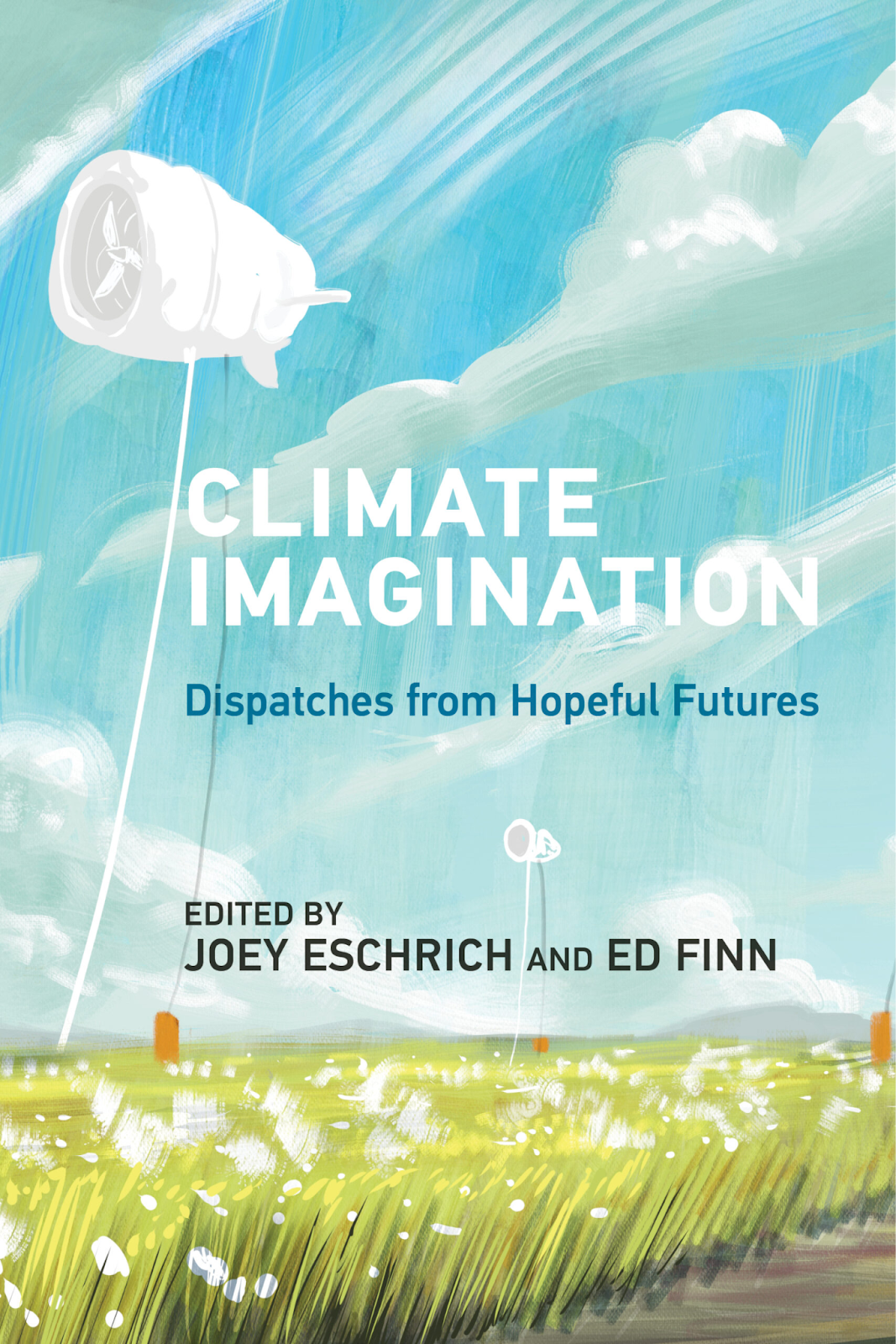
That’s the animating idea behind CSI’s new anthology, Climate Imagination: Dispatches from Hopeful Futures, just out from MIT Press. Writers from around the world were invited to imagine climate futures rooted in their own communities and landscapes. Not one future handed down from experts. Many futures, from many voices. It’s an open invitation to imagine more widely.
2. A Story Puts Everyone On The Same Page
One of CSI’s most powerful insights is that a great story can do something no PowerPoint ever could: it gives everyone (the data scientist, the engineer, the policymaker, the skeptic) a shared vocabulary to talk about the future together.
Ed put it simply: “A great science fiction story literally puts everybody on the same page. It can save you hundreds of hours of meetings.”
Among CSI’s many diverse projects, one of my favorites ones is their long-running Future Tense series. Comprising nearly 100 original speculative fiction stories, each paired with an expert response and original artwork. Little packages of futures, freely available, perfect for sparking real conversation.
My favorite is Annalee Newitz’s award-winning “When Robot and Crow Saved East St. Louis“ about a decommissioned CDC drone that learns to speak crow and teams up with a young scientist to ward off a virus. After I shared it with a colleague, she admitted she now says good morning to every crow she sees. Just in case.
That’s what a great story does. It changes how you move through the world.
Ruth showed me the same principle at work with younger audiences through the Frankenstein Bicentennial Project. Instead of inviting kids to “come talk about science ethics,” they handed them pool noodles, rubber bands, markers, and dollar-store electric toothbrushes to build Scribble Bots, vibrating little creatures that draw unpredictable, wobbly lines.
Then came the questions: Is this art? Who made it, you or the robot? If someone wants to buy it, who gets paid? What if it accidentally draws on your couch?
Within minutes, elementary schoolers were deep in conversation about AI, authorship, and responsibility. Because the story and the experience made it irresistible.
3. Audit the Futures You’re Already Consuming
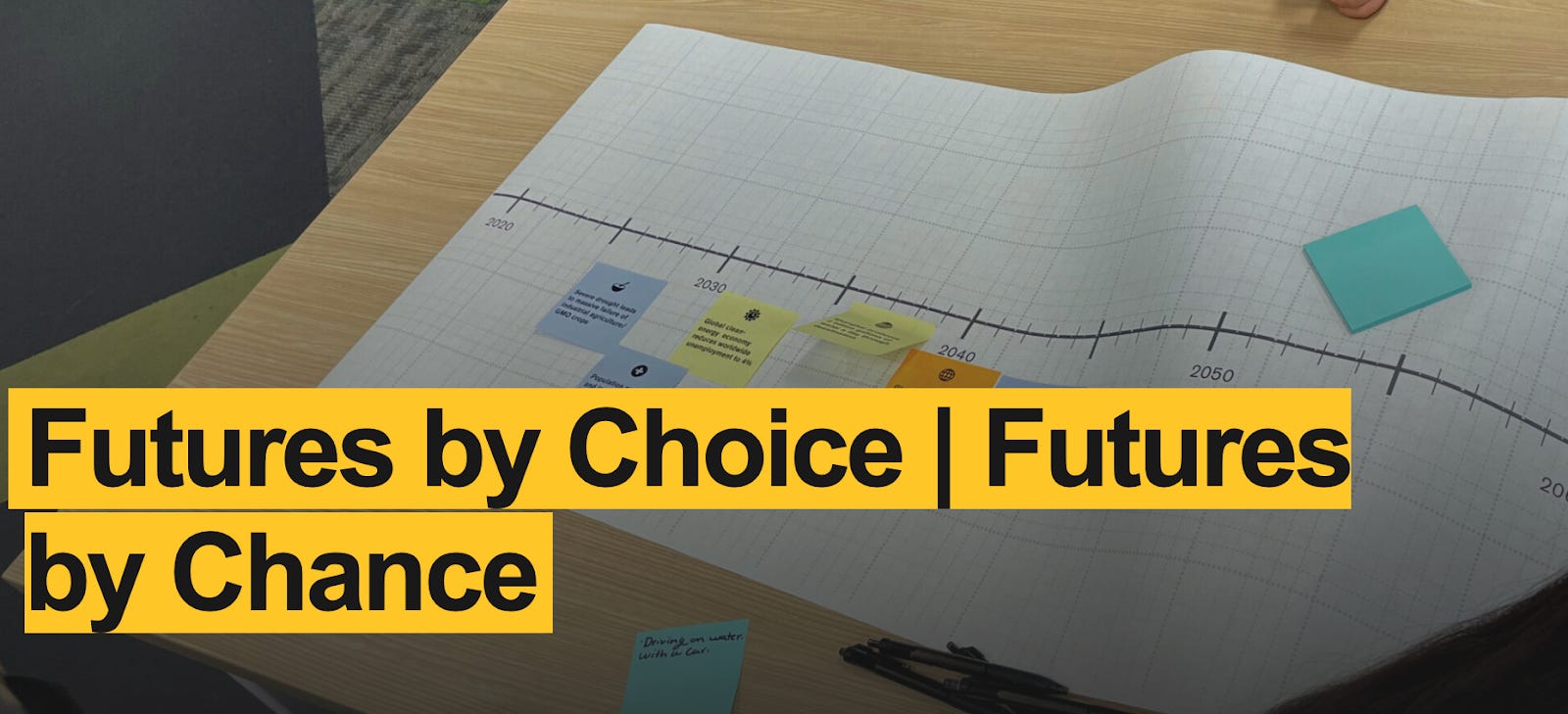
A few years ago Ruth created an experience called “Futures by Choice, Futures by Chance,” a futures-thinking exercise designed to help individuals imagine the next fifty years, distinguishing between the future we intentionally create and the one that happens to us. It’s a question most of us have never actually asked ourselves.
Lately she’s taken that idea one step further, helping people pay attention to the futures they’re already absorbing without even realizing it.
Every show we stream, every ad we scroll past, every book we read contains an implicit vision of the future. But most of us take it in passively, without ever asking: Whose future is this? Is it hopeful or dystopian? Do I have agency in it, or not?
Ruth has created a simple reflective exercise that invites people to map the futures they’re consuming on two axes: hopeful vs. dystopian, and high agency vs. low agency. No judgment about what’s right or wrong to watch or read. Just awareness.
Once you start asking those questions, you shift from passive consumer of the future to active participant in it. You start noticing which stories are expanding your sense of what’s possible and which ones are quietly shrinking it.
This is what CSI calls “rewilding” the imagination, freeing it from the domesticated, narrow version we’ve been handed, and returning it to something wilder, more expansive, and more truly our own.
Your Turn: Write a Postcard from the Future
Pick a year. Pick a place that matters to you (your city, your neighborhood, your kitchen table). Write a short note from that future to someone in the present.
What has changed? What’s been preserved? What are you grateful your ancestors (that’s us, right now) had the vision to plant, build, or protect?
It doesn’t need to be polished or naively optimistic. It just needs to be yours.
One of my students once wrote a postcard from Paris in 2040: “Greetings from heated Paris, where we’re sitting under gorgeous canopies our ancestors planted for us.” It took maybe ten minutes. And it changed how she thought about what we’re building right now.
If you want a little structure, CSI has beautiful prompts and tools at csi.asu.edu. The Imagination Sketchbook is a perfect 20-minute entry point.
Write your postcard and share it in the comments. The future is unwritten, which means we get to write it.

Greetings from Salt Lake Valley 2050
I can see the mountains every day of the year, that there's not fog, because the pollution is gone. A simple rethinking and intentionality around city planning made all the difference. It took some effort, but now there's more fields of wildflowers than interstates and highways.